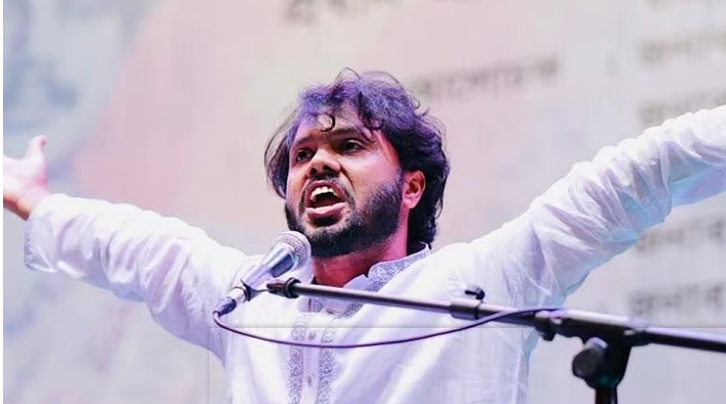
Sharif Osman Hadi: A Voice Silenced, A Conscience Awakened
19 Dec 2025
0
0
Some lives do not fade when the heart stops beating. Some voices echo louder after they are silenced. Sharif Osman Hadi was one such life — a man whose courage unsettled the powerful, whose words carried the pain of the unheard, and whose death has left a wound that words struggle to heal.
As the spokesperson and one of the leading faces of Inkilab Mancha, Hadi was not merely a political figure. He was a symbol of moral defiance in a time of fear, a reminder that truth spoken softly can still shake the ground beneath authoritarian comfort. His journey was not driven by ambition or personal gain, but by a relentless sense of responsibility — a belief that silence, in the face of injustice, is a form of betrayal.
Hadi spoke for those who had no microphone, no protection, and no safe space to speak. He stood where it was dangerous to stand and spoke when it was safer to remain quiet. He knew the risks. He understood the cost. Yet he chose conscience over comfort, principle over survival. That choice ultimately cost him his life.
On a December evening, violence reached him in its most brutal form. Bullets tore through flesh, but what they truly aimed to destroy was an idea — the idea that citizens have the right to question power, that dissent is not treason, and that justice cannot be postponed indefinitely. Gravely wounded, Hadi fought for his life across borders, clinging to hope in a foreign hospital. But hope, fragile as it was, could not withstand the damage inflicted by hatred and fear. He passed away far from home, leaving behind a nation stunned into silence.
His death was not just the loss of a man. It was the loss of a promise — a reminder of how easily voices can be erased in societies where accountability is fragile. For many, Hadi represented the possibility that peaceful resistance could still exist, that words could still matter more than weapons. His absence now raises an unsettling question: if voices like his can be extinguished so easily, what future awaits those who dare to speak?
Yet, even in death, Sharif Osman Hadi refuses to be reduced to a statistic or a headline. His legacy lives in the tears of those who believed in him, in the quiet rage of youths who saw in him a reflection of their own suppressed dreams, and in the uncomfortable silence of those who know, deep down, that he spoke truths they chose to ignore.
There is something profoundly tragic about a society that mourns its brave only after they are gone. Hadi did not ask for martyrdom. He asked for dialogue. He asked for justice. He asked for dignity. The fact that these demands were answered with violence is not merely a personal tragedy — it is a collective failure.
History has a cruel habit of repeating itself when lessons are ignored. But it also has a gentler side: it remembers those who stood on the right side of it, even when that side was lonely and dangerous. Sharif Osman Hadi now belongs to that memory — not as a victim alone, but as a moral witness to his time.
His blood does not cry for revenge; it cries for reflection. It asks uncomfortable questions about power, responsibility, and the price of silence. It asks whether we will honor his sacrifice by remembering him for a day — or by refusing to forget the values he lived and died for.
In the end, a voice can be silenced, but the truth it carries cannot be buried forever. Sharif Osman Hadi’s life reminds us that courage is not the absence of fear, but the decision that something else matters more. And though his heart has stopped, the echo of his conscience continues to beat — in every mind that dares to question, and in every soul that refuses to accept injustice as normal.
Comments
()
Guest Mode
Sign in to like, comment or create a tracked share link.
Log in with your registered account to earn reward points for eligible activities and post comments.
Login
Related Posts

Childhood Fishing Memories in Rural Bangladesh – A Beautiful Village Fishing Story from the Rivers and Canals
The joy of fishing during childhood in rural Bangladesh was truly unforgettable. Even today, whenever I close my eyes, t
...
Winter Morning and Evening Memories: A Lost Sweet Tradition of Rural Life
Memories from the past never truly fade; instead, they grow warmer and more meaningful with time. Among those cherished
...

There is no age for learning: Is it possible to be successful even if you start late?
There is no age limit for learning. Even if you start late, it is possible to change your life if you have the desire an
...
.jpeg)
Study or Love? Why the right decision is most important in student life.
Love may come in student life, but that is not the end of life. This article is about why education is the strongest fou
...
Memories of My Maternal Grandfather’s Home: Freedom, Rivers, and Childhood Joy
Introduction
Childhood is made of places, people, and emotions that grow stronger with time. For me, that place was m
...